
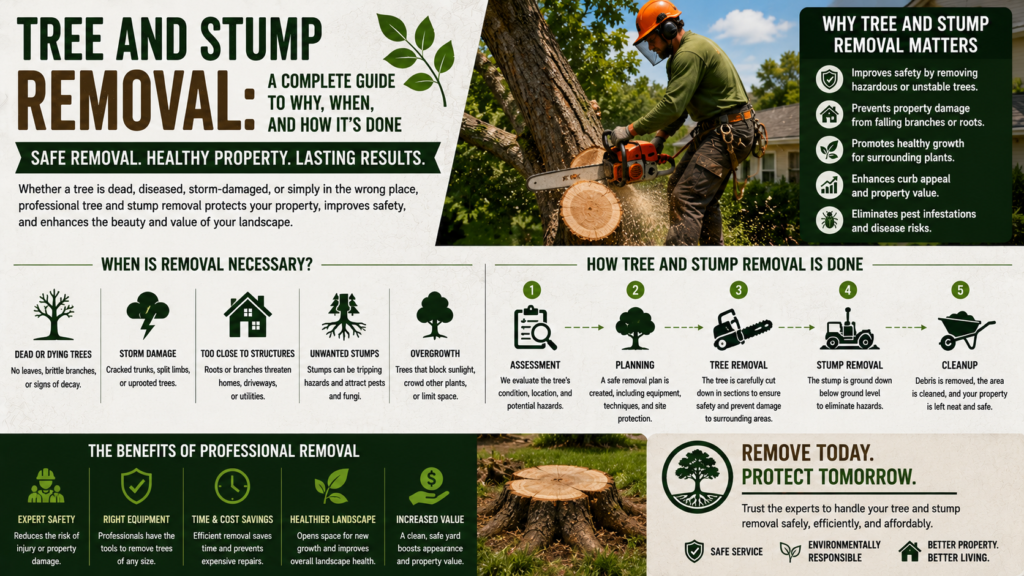
Trees are wonderful additions to any property, but there are times when removing a tree, and the stump it leaves behind, is the right call. Whether the tree is dying, leaning dangerously, blocking new construction, or causing damage to nearby structures, tree and stump removal is a careful, multi-step process that affects everything from property safety to landscape design.
This article walks through what Tree And Stump Removal Detroit actually involves, why it’s necessary, the methods used, and what property owners should understand before scheduling the work.
Why Trees Get Removed in the First Place
Cutting down a tree isn’t always an easy decision, but there are several common reasons it becomes necessary. Sometimes the tree is diseased and at risk of spreading infection to other trees. Sometimes it’s storm-damaged with weakened branches or a compromised trunk. Other times the tree has simply outgrown its location, threatening foundations, power lines, sidewalks, or roofs.
Trees can also become hazards as they age. Internal decay isn’t always visible from the outside, and a tree that looks healthy may actually be one strong wind away from failing. Construction projects, road expansions, and landscape redesigns are other common reasons for removal.
Whatever the reason, the goal is the same: remove the tree safely, completely, and with as little disruption to the surrounding property as possible.
Why Stump Removal Is Just as Important
Once a tree comes down, the stump and root system that remain can cause more problems than people expect. Leaving a stump in place may seem harmless, but it can create a surprisingly long list of issues.
Pest attraction. Decaying stumps draw termites, carpenter ants, wood-boring beetles, and other insects. These pests can spread to nearby healthy trees or, in worst-case scenarios, find their way to your home.
New growth. Many tree species send up sucker shoots from the stump or roots, meaning a freshly cut tree can essentially keep coming back. This creates ongoing maintenance work and can disrupt landscaping plans.
Safety hazards. Stumps are notorious tripping hazards, especially when grass grows around them. They’re also a risk to mowers and other lawn equipment.
Disease and fungus. Decaying wood encourages fungal growth that can spread to surrounding plants. Stumps can also harbor pathogens that affect nearby healthy trees.
Aesthetic and property value impact. A leftover stump tends to stand out, and not in a good way. It signals an unfinished project and can detract from curb appeal.
Future planting limits. As long as the stump and roots remain, planting new trees nearby is difficult. The roots compete for nutrients and physical space.
Common Methods for Tree Removal
Tree removal varies depending on the size, location, and condition of the tree. For small trees in open areas, the process can be relatively straightforward, often involving felling the tree in a single direction. For large trees or those near buildings, power lines, or other obstacles, professionals typically use sectional removal, where the tree is dismantled piece by piece from the top down, often with rigging and ropes for control.
Specialized equipment such as bucket trucks, cranes, climbing harnesses, and chippers are common on professional jobs. Safety is always the top priority because tree work consistently ranks among the most hazardous outdoor tasks.
Stump Removal vs. Stump Grinding
Once the tree is down, property owners typically face a choice between two main approaches: stump grinding and full stump removal. Each has its own purpose.
Stump grinding. A specialized grinder chips the stump down to several inches below ground level, leaving the root system to decay naturally underground. It’s fast, less disruptive to the surrounding landscape, and ideal for most residential properties.
Full stump removal. This involves pulling the entire stump and major roots out of the ground. It leaves a larger hole that needs backfilling, but it provides a completely clean slate, useful for new construction, replanting in the same location, or major landscape redesigns.
Both methods solve the stump problem, but the right choice depends on what you plan to do with the space afterward.
Other Stump Removal Techniques
There are a few additional methods that come up in conversations about stumps. Chemical stump removal uses products that accelerate decay, breaking the stump down over several weeks. It’s slower and less practical for active landscapes. Burning is occasionally used, though local fire restrictions limit when and where this can be done. Manual removal with hand tools is technically possible but typically only realistic for very small stumps.
For most situations involving medium or large trees, professional grinding or full removal remains the most reliable approach.
The Tree and Stump Removal Process
A typical tree and stump removal project begins with a site assessment. Professionals evaluate the tree’s condition, the safety of the work area, surrounding structures, utility lines, and the best removal approach. From there, the work usually proceeds in clear stages.
First, the tree is felled or dismantled. Limbs and branches are chipped or hauled away. The main trunk is cut into manageable sections. Once the tree is down and the area is cleared, the stump is addressed using whichever method fits the situation. Afterward, the surrounding area is cleaned up, holes are backfilled, and the soil is leveled and prepared for grass seed, new plants, or whatever the next step might be.
Common Questions About Tree and Stump Removal
Will a tree grow back from a stump? In some cases, yes. Many species send up new shoots from the remaining roots, which is why grinding or full removal is recommended.
Do stumps attract termites? They can. Decaying wood is an ideal environment for termites and other wood-loving insects.
How long does a stump take to decay naturally? It depends on the species, soil, and moisture, but full decay can take a decade or more. Hardwoods like oak decompose much more slowly than softer species.
Is it safe to remove a tree on my own? Small trees in open spaces may be manageable, but anything large, leaning, or near structures or power lines requires professional equipment and experience. Tree work is one of the most dangerous tasks a homeowner can attempt.
What happens to the wood after removal? Chips can be used as mulch, large logs may be reclaimed, and the rest is typically hauled off for proper disposal or recycling.
Why Detroit Properties Often Need Tree and Stump Removal
Detroit’s mix of mature neighborhoods, urban forests, and seasonal weather creates plenty of situations where tree removal becomes necessary. Storms, aging trees, expanding root systems, and ongoing redevelopment all contribute to the demand. Professional Tree And Stump Removal Detroit services help residents and commercial property owners safely handle these situations, restoring usable space and protecting nearby structures.
Wrapping Up
Tree and stump removal isn’t just about cutting something down. It’s about restoring a property to a safer, more usable, and more attractive state. From identifying when a tree needs to come down, to choosing between grinding and full stump removal, to handling the cleanup, the process involves a series of careful decisions.
For property owners, the most important thing is recognizing that leaving stumps or hazardous trees in place tends to create more problems than it solves. A complete, professional approach protects the rest of your landscape, reduces pest issues, and gives you a clean foundation for whatever comes next, whether that’s new plantings, an open lawn, a patio, or simply peace of mind.
Trees give us shade, beauty, and character. But when one needs to come down, doing the job thoroughly and responsibly is just as much a part of caring for the land as planting one in the first place.