Guest Post by Units
In the modern supply chain, temperature control is not a luxury—it is a necessity. For businesses dealing with dairy products, fresh produce, pharmaceuticals, cosmetics, and countless other temperature-sensitive goods, maintaining the cold chain is critical to product quality, safety, and profitability. A single break in temperature control can ruin entire inventory batches, leading to financial losses, compliance violations, and damaged brand reputation.
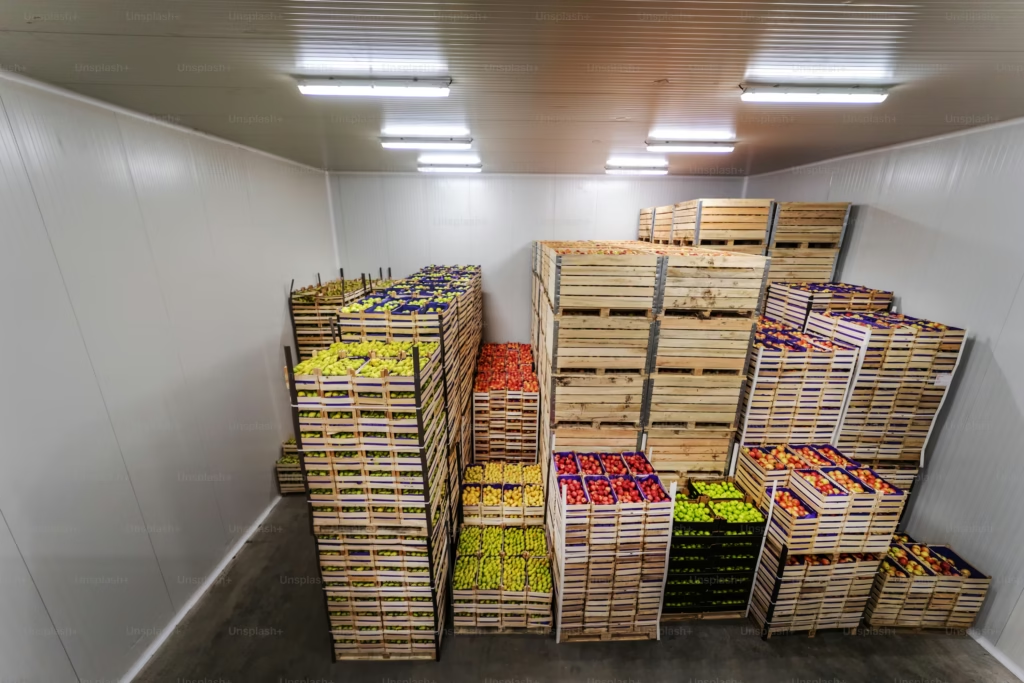
This is where professional Chilled Storage solutions become indispensable. Unlike standard warehousing or even frozen storage, chilled storage maintains precise temperatures typically between +2°C and +8°C, creating the ideal environment for products that must remain cool but not frozen. From fresh dairy and ready-to-eat meals to skincare products and health supplements, chilled storage preserves integrity, extends shelf life, and ensures regulatory compliance.
When it comes to finding premier chilled storage solutions in the Kingdom of Saudi Arabia, Units (visit units.sa) stands as a top company. With state-of-the-art facilities equipped with fully integrated cooling systems, strict hygiene protocols, and certification from the Saudi Food and Drug Authority (SFDA), Units delivers unparalleled chilled storage solutions for businesses of all sizes .
In this comprehensive guide, we will explore the fundamentals of chilled storage, the specific demands of Chilled Storage in Jeddah and Chilled Storage in Dammam, and why Units is the partner you can trust for your temperature-controlled warehousing needs.
What Is Chilled Storage?
Chilled Storage refers to temperature-controlled warehousing facilities that maintain products at cool but non-freezing temperatures, typically ranging from +2°C to +8°C . This temperature range is distinct from frozen storage (which operates below -18°C) and ambient storage (room temperature).
Products Suitable for Chilled Storage
Chilled storage is ideal for a wide range of temperature-sensitive products:
Food and Beverage Products:
- Dairy products (milk, yogurt, cheese, butter)
- Fresh juices and beverages
- Ready-to-eat meals and prepared foods
- Fresh produce (certain fruits and vegetables)
- Meat and poultry (short-term storage)
- Seafood and fish products
Pharmaceutical and Healthcare Products:
- Vaccines and biologics (typically 2°C to 8°C)
- Insulin and other temperature-sensitive medications
- Injectable drugs and serums
- Laboratory reagents and samples
Cosmetics and Personal Care:
- Perfumes and fragrances (heat-sensitive)
- Creams, lotions, and serums
- Skincare products with active ingredients
- Hair care products with natural formulations
Other Temperature-Sensitive Items:
- Health supplements and vitamins
- Art pieces, collectibles, and delicate items
- Certain industrial raw materials
- Flowers and plants
Chilled Storage vs. Frozen Storage vs. Ambient Storage
| Storage Type | Temperature Range | Best For |
|---|---|---|
| Chilled Storage | +2°C to +8°C | Dairy, fresh produce, vaccines, cosmetics |
| Frozen Storage | -18°C to -25°C | Meat, seafood, frozen vegetables, ice cream |
| Ambient Storage | Room temperature | Dry goods, canned foods, non-perishables |
The key distinction is that chilled storage keeps products cool enough to slow bacterial growth and enzymatic activity without freezing, which would damage cell structures in many fresh products.
Key Features of Professional Chilled Storage Facilities
Precise Temperature Control: Advanced cooling systems with real-time monitoring ensure temperatures remain within the specified range. Any deviation triggers immediate alerts.
Humidity Management: Proper humidity levels prevent product dehydration or moisture condensation, both of which can compromise quality.
Air Circulation and Filtration: Even air distribution eliminates hot spots and maintains consistent conditions throughout the storage area.
SFDA Certification: For food and pharmaceutical products, facilities must be certified by the Saudi Food and Drug Authority to ensure compliance with safety standards .
24/7 Monitoring and Security: Continuous surveillance and alarm systems protect both product integrity and security.
Backup Power Systems: Generator backup ensures temperature control continues during power outages.
Chilled Storage in Jeddah: Supporting the Commercial Gateway
Jeddah, the commercial capital of Saudi Arabia and gateway to the Red Sea, is a bustling hub for trade, logistics, and food distribution. The demand for Chilled Storage in Jeddah is driven by the city’s unique position as a major port and its thriving food and beverage sector.
Why Jeddah Needs Chilled Storage
Port of Jeddah Activity: As the busiest seaport in the Red Sea, the Port of Jeddah handles enormous volumes of imported food products, pharmaceuticals, and temperature-sensitive goods. Upon arrival, these products require immediate transfer to chilled storage facilities to preserve their integrity before distribution across the Kingdom.
Thriving Food and Beverage Sector: Jeddah is home to thousands of restaurants, cafes, cloud kitchens, and catering businesses. These establishments depend on reliable chilled storage for dairy, fresh produce, prepared ingredients, and beverages .
Growing Pharmaceutical Imports: With the expansion of healthcare services in the region, pharmaceutical imports requiring 2°C to 8°C storage—including vaccines, insulin, and biologics—have increased significantly .
Tourism and Hospitality: As a gateway for pilgrims and tourists, Jeddah’s hospitality sector requires robust cold chain infrastructure to support hotel kitchens, catering services, and food distributors.
Key Considerations for Chilled Storage in Jeddah
High Ambient Temperatures: Jeddah experiences extreme heat, especially during summer months. Chilled storage facilities must have robust cooling systems capable of maintaining consistent internal temperatures despite external heat.
Port Proximity: Ideally, chilled storage facilities should be located near the port to minimize transit time between vessel offloading and cold storage entry.
SFDA Compliance: For food and pharmaceutical products, facilities must meet SFDA standards for temperature control, hygiene, and documentation.
How Units Serves Jeddah
Units provides premium Chilled Storage in Jeddah through strategically located facilities designed to meet the needs of importers, distributors, and local businesses. Key advantages include:
- SFDA-Certified Warehouses: Full compliance with Saudi Food and Drug Authority standards
- Fully Integrated Cooling Systems: Advanced technology for stable temperature maintenance
- Humidity and Air Quality Control: Protecting product quality and preventing spoilage
- Smart Inventory Tracking: Real-time visibility into stock levels and expiry monitoring
- Flexible Access Hours: Saturday to Thursday, 7 AM to 5 PM
- 24/7 Surveillance: Maximum security for valuable inventory
For Jeddah-based businesses—from restaurants and caterers to importers and distributors—Units delivers reliable, compliant chilled storage that keeps products fresh and businesses running smoothly.
Chilled Storage in Dammam: Powering the Eastern Province’s Industrial Hub
Dammam, the capital of the Eastern Province, is the industrial and energy heart of Saudi Arabia. The demand for Chilled Storage in Dammam is driven by the region’s massive food processing industry, growing pharmaceutical sector, and strategic position as a logistics gateway to Gulf markets.
Why Dammam Needs Chilled Storage
Food Processing and Manufacturing: The Eastern Province is home to major food processing facilities, including dairy producers, meat processors, and beverage manufacturers. These operations require significant chilled storage capacity for raw ingredients, work-in-progress inventory, and finished products awaiting distribution.
Proximity to King Abdulaziz Port: King Abdulaziz Port in Dammam is the largest port in the Arabian Gulf and a major entry point for imported food, pharmaceuticals, and consumer goods. Chilled storage facilities near the port are essential for maintaining cold chain integrity upon arrival.
Industrial and Petrochemical Sector: Beyond food, the industrial sector requires chilled storage for certain raw materials, chemicals, and temperature-sensitive components used in manufacturing processes.
Growing Healthcare Infrastructure: With expanding hospitals and medical facilities across the Eastern Province, demand for pharmaceutical cold storage—including vaccines, biologics, and temperature-sensitive medications—continues to grow .
Export to Gulf Markets: Dammam’s strategic location serves as a gateway for exports to Bahrain, Kuwait, Qatar, and the UAE. Chilled storage facilities support cross-border trade by preserving product quality during consolidation and transit.
Key Considerations for Chilled Storage in Dammam
Scale and Capacity: Industrial clients often require large-scale chilled storage capacity. Facilities must be designed to handle high volumes while maintaining precise temperature control.
Integration with Logistics: Proximity to King Abdulaziz Port and major highways is critical for minimizing transit times and reducing cold chain risks.
Multi-Temperature Capability: Some facilities offer the ability to store chilled, frozen, and ambient products within the same location, providing operational flexibility .
Compliance and Certification: For food and pharmaceutical products, SFDA certification is mandatory .
How Units Serves Dammam
Units delivers premium Chilled Storage in Dammam through facilities designed for industrial-scale requirements while maintaining the precision and compliance that temperature-sensitive products demand:
- Large-Capacity Warehouses: Ample space for bulk storage of food, pharmaceutical, and industrial products
- SFDA-Certified Facilities: Full compliance with Saudi regulatory standards
- Advanced Temperature Monitoring: Real-time tracking and alert systems
- Smart Inventory Management: Online platform for stock visibility and expiry tracking
- Secure Environment: 24/7 surveillance and controlled access
- Strategic Location: Convenient access to King Abdulaziz Port and major transportation routes
For businesses in Dammam and across the Eastern Province, Units provides the chilled storage infrastructure necessary to support industrial-scale operations while maintaining product quality and regulatory compliance.
Why Units Is the Top Company for Chilled Storage
With the growing demand for temperature-controlled warehousing across Saudi Arabia, several providers offer cold storage services. However, Units stands as a top company for Chilled Storage solutions for several compelling reasons:
SFDA-Certified Facilities
Units maintains full certification from the Saudi Food and Drug Authority, ensuring that all storage practices meet the Kingdom’s stringent safety and hygiene standards . This certification is essential for businesses storing food products or pharmaceuticals and provides peace of mind that your inventory is compliant.
State-of-the-Art Cooling Infrastructure
Units facilities feature fully integrated cooling systems designed for precise temperature control and energy efficiency. Key infrastructure elements include:
- Advanced refrigeration units with backup systems
- Real-time temperature monitoring with automated alerts
- Humidity and air quality control systems
- Insulated construction to maintain internal conditions
Smart Inventory Management
Units provides a cutting-edge online platform for inventory management, offering real-time visibility into stock levels, expiry dates, and storage conditions . This digital integration allows businesses to manage their stored products remotely, reducing administrative burden and improving supply chain efficiency.
Security and Monitoring
All Units chilled storage facilities feature 24/7 surveillance, controlled access, and security personnel. Your valuable inventory is protected from theft, tampering, and unauthorized access.
Flexible Contracts and Scalable Solutions
Units understands that businesses have unique and evolving storage needs. They offer flexible contract terms and scalable space options, allowing you to expand or contract as your requirements change .
Comprehensive Product Range
Beyond chilled storage, Units provides dry storage and frozen storage solutions, allowing businesses to centralize their warehousing needs with a single provider .
Local Expertise with Kingdom-Wide Presence
With facilities serving key markets including Jeddah and Dammam, Units brings deep understanding of local logistics challenges and regulatory requirements. Their team provides responsive support tailored to each region.
Industries Benefiting from Units Chilled Storage
Restaurants and Cafés: Store dairy, fresh produce, prepared ingredients, and beverages at optimal temperatures. Units serves restaurants, cloud kitchens, and catering businesses across the Kingdom .
Food Distributors and Wholesalers: Maintain large inventories of chilled products for distribution to retailers, hotels, and institutions.
Supermarket Chains: Backup storage for perishable categories including dairy, deli, fresh produce, and ready-to-eat meals .
Pharmaceutical Companies: SFDA-certified chilled storage for temperature-sensitive medications, vaccines, and biologics .
Cosmetics and Personal Care Brands: Protect heat-sensitive perfumes, creams, and skincare products that can degrade at high ambient temperatures .
Health and Organic Food Companies: Store supplements, proteins, and natural products that require stable, cool conditions.
Importers and Exporters: Utilize chilled storage near ports in Jeddah and Dammam to preserve product integrity during customs clearance and distribution.
How Units Chilled Storage Works
Step 1: Needs Assessment
Contact Units to discuss your specific storage requirements—product types, volume, temperature needs, and access frequency.
Step 2: Facility Selection
Units recommends the optimal facility based on your location (Jeddah, Dammam, or other markets) and storage requirements.
Step 3: Inventory Intake
Your products are received, inspected, and moved into temperature-controlled storage. Units staff follow strict hygiene protocols to prevent contamination.
Step 4: Smart Inventory Management
Access your inventory online through the Units platform. Track stock levels, expiry dates, and storage conditions in real time .
Step 5: Ongoing Access
Access your inventory during operating hours (Saturday to Thursday, 7 AM to 5 PM) with advance coordination .
Step 6: Order Fulfillment
When products are needed, Units staff retrieve and prepare them for pickup or delivery according to your instructions.
Conclusion
Chilled storage is an essential component of the modern supply chain, particularly in Saudi Arabia where extreme ambient temperatures and growing demand for temperature-sensitive products create unique challenges. For businesses in Jeddah, Dammam, and across the Kingdom, reliable chilled storage protects product quality, ensures regulatory compliance, and supports business growth.
The demand for Chilled Storage in Jeddah is driven by the city’s role as a commercial gateway and its thriving food service sector. The demand for Chilled Storage in Dammam reflects the Eastern Province’s industrial scale and strategic position in Gulf trade.
Units has earned its reputation as a top company for chilled storage through SFDA-certified facilities, advanced cooling systems, smart inventory management, and unwavering commitment to customer service. Whether you operate a restaurant, a food distribution business, a pharmaceutical company, or a cosmetics brand, Units provides the temperature-controlled storage solutions you need to succeed.
Visit units.sa today to learn more about chilled storage options in Jeddah, Dammam, and other Saudi markets. Request a consultation and discover how Units can protect your temperature-sensitive products.
Frequently Asked Questions (FAQs)
Q1: What temperature range does chilled storage maintain at Units?
A: Units chilled storage facilities maintain temperatures typically between +2°C and +8°C (approximately 36°F to 46°F), which is the standard range for dairy products, fresh produce, pharmaceuticals, and other temperature-sensitive items . For specific temperature requirements outside this range, Units can discuss custom solutions based on your product needs.
Q2: Is Units certified by the Saudi Food and Drug Authority (SFDA)?
A: Yes, Units warehouses are fully certified by the Saudi Food and Drug Authority . This certification ensures that all storage practices—including temperature control, hygiene protocols, and documentation—meet the Kingdom’s stringent safety standards. For businesses storing food or pharmaceutical products, SFDA certification is essential for regulatory compliance.
Q3: What types of products can be stored in chilled storage at Units?
A: Units chilled storage accommodates a wide range of products, including dairy products, juices, ready-to-eat meals, perfumes, skincare products and creams, health supplements, bottled water, and temperature-sensitive raw materials . For pharmaceutical products requiring 2°C to 8°C storage, Units facilities are appropriately equipped. Prohibited items include weapons, hazardous materials, counterfeit goods, and any items illegal under Saudi law .
Q4: Does Units offer chilled storage in both Jeddah and Dammam?
A: Yes, Units serves businesses across the Kingdom, including key markets in Jeddah and Dammam. For the most current information on facility locations and availability in specific cities, visit units.sa or contact the Units sales team directly.
Q5: How can I access my inventory stored with Units?
A: You can access your inventory anytime through the Units user-friendly online platform, which provides real-time visibility into stock levels, expiry dates, and storage conditions . Physical access to the warehouse is available from Saturday to Thursday, 7 AM to 5 PM . For specific access arrangements or after-hours requests, coordinate directly with the Units team.